With more than $1 billion in investment supporting multiple new developments and expansions, the St. Louis region continues to strengthen its position as one of the nation’s leading hubs for Food & AgTech manufacturing, distribution and innovation. Supported by a central U.S. location, unmatched freight network providing global access and an internationally recognized research ecosystem, the bi-state Missouri/Illinois area is home to household names such as Anheuser-Busch InBev, Purina, Post Holdings, Tyson Foods and Prairie Farms along with leading research institutions like the Donald Danforth Plant Science Center and the Bayer Innovation Center. These and other companies in the Food and AgTech sector are benefitting from the region’s competitive advantages rooted in proximity to raw materials, access to global markets and availability of skilled talent, with nearly 3.5 times as many sector employees as similar sized metros.
Located in the heart of America’s agricultural belt, 50 percent of all U.S. crops are produced within a 500-mile radius—or a day’s drive—of St. Louis, making the region an ideal location for food processing, animal nutrition, beverage production and agricultural technology development. Ongoing investments across the bi-state area underscore the sector’s momentum and long-term growth outlook.
One of the largest recent investments is American Foods Group’s $800 million beef processing facility in Warren County, Mo., strategically located along Interstate 70. The 775,000-square-foot facility opened in May 2025 with 400 new employees, and at full capacity, it is expected to employ up to 1,300 workers and generate an estimated $1 billion regional economic impact.
“It really is a great location. It provides good opportunity to serve our customers and expand as that becomes an opportunity,” said Scott Willert, president of America’s Service Line & America’s Logistics, which provides transportation and logistics services for American Foods Group.
In November 2025, Performance Food Group, Inc.—one of the largest food distributors in the U.S.—celebrated the grand opening of its new 338,000-square-foot distribution facility in Berkley, Mo. Representing an investment of approximately $115 million, the new Performance Foodservice – Middendorf facility is adding an estimated 100 new jobs in the region. Prairie Farms is building a $9 million headquarters complex in Edwardsville, Ill., that is expected to be completed in summer 2026. Meanwhile, Tyson Foods’ $180 million expansion of its Caseyville, Ill., facility will retain 300 existing jobs and create 400 new positions through the addition of seven new production lines. Representatives from Tyson Foods previously shared that location and workforce were two of the driving factors behind its decision to invest in expanding the Caseyville facility, noting that the strategic location in the central part of the country helps efficiently meet customers’ needs and complimenting the collaboration between local high schools and community colleges to invest in the emerging workforce, tailoring program curriculum to skills that are in demand at area businesses
Global beverage leader Anheuser-Busch InBev announced in October 2024 an $8 million investment in its flagship St. Louis brewery, reaffirming the city’s historic and ongoing role in the company’s operations. The announcement, which touted $2 billion in investments nationwide by the company over the prior five years revealed that, since 2019, the brewer had invested more than $165 million in its St. Louis campus alone, including renovating and reopening its Technical Excellence Center, which allows its workforce to grow in their careers and access new opportunities in their desired manufacturing fields.
At the time of the announcement, Anheuser-Busch CEO Brendan Whitworth said, “Our continued investments in our St. Louis brewery benefit not only our local team, but also our hometown, which continues to be a core part of our identity after more than 165 years.”
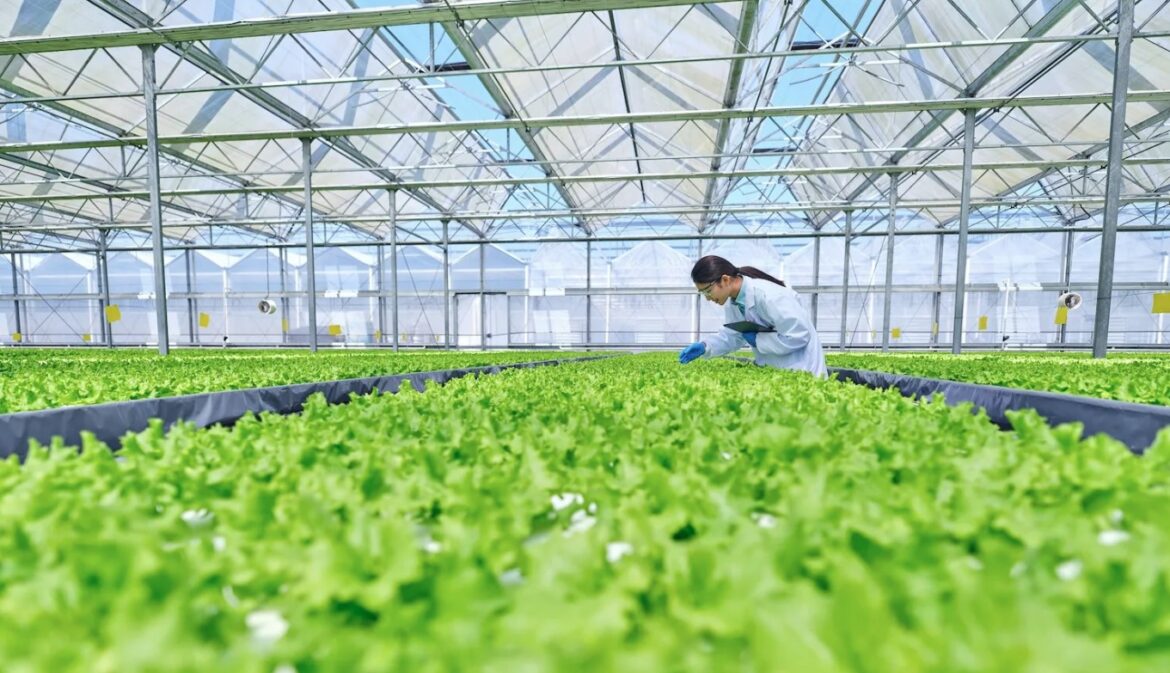
Beyond food manufacturing, the St. Louis region has emerged as a world-class AgTech innovation ecosystem, anchored by institutions such as the Donald Danforth Plant Science Center and the Bayer Innovation Center. The region is home to more than 1,000 plant scientists—one of the highest concentrations in the world—and more than 400 biotech research and development companies, supported by venture capital, accelerators and commercialization programs. Independent startups, large-scale corporations and the brightest minds in the industry are working in tandem to pioneer solutions for global agricultural challenges.
The sector’s collaborative strength is further demonstrated by $87 million in National Institutes of Health startup grants recently awarded and the appropriation of $142 million in federal commercialization funding, helping move research breakthroughs from the lab to the marketplace.
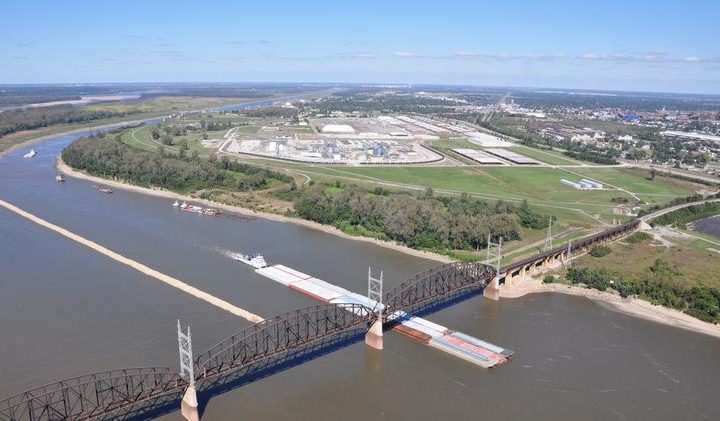
Overlaying this innovation ecosystem is the region’s unparalleled freight network. The 15-mile stretch of the Mississippi River known as the “Ag Coast of America” features 16 barge transfer facilities with the highest barge-handling capacity anywhere on the river, along with four ice-free ports, six Class I railroads, four major interstates and two international cargo airports. This infrastructure enables efficient movement of raw materials and finished products to domestic and global markets.
“The same rich agricultural heritage and strategic location within America’s heartland that drives businesses to locate here is driving the region toward AgTech innovation,” said Mary Lamie, Executive Vice President of Multimodal Enterprises for Bi-State Development and head of the St. Louis Regional Freightway. “Collaboration is fostered among scientists, entrepreneurs, and investors as the St. Louis region propels AgTech startups towards success. This is solidifying the region’s position as a premier destination for agricultural technology innovation and food manufacturing and distribution.”
Food & AgTech is one of four targeted industries in which the St. Louis region holds a clear competitive advantage, alongside Advanced Manufacturing, Metals and Chemicals. Together, these sectors reinforce the region’s role as a global logistics hub while driving economic growth and job creation across the bi-state area.